
Time:2025-10-30 Browse: 1
Common outdoor devices in daily life include: charging stations, industrial equipment, digital signage, vending machines, parcel lockers, bus stop display screens, in-vehicle displays, etc. LCD display modules used in outdoor applications have different requirements compared to consumer-grade displays due to their operating environments—such as high brightness, UV resistance, waterproofing, anti-mis-touch functionality, anti-glare properties, and high reliability. Among these, "UV resistance" is often poorly understood. This article focuses on sharing common solutions for protecting outdoor LCD display modules against UV radiation.
Before discussing solutions for UV resistance, let's first provide a brief introduction to UV light.
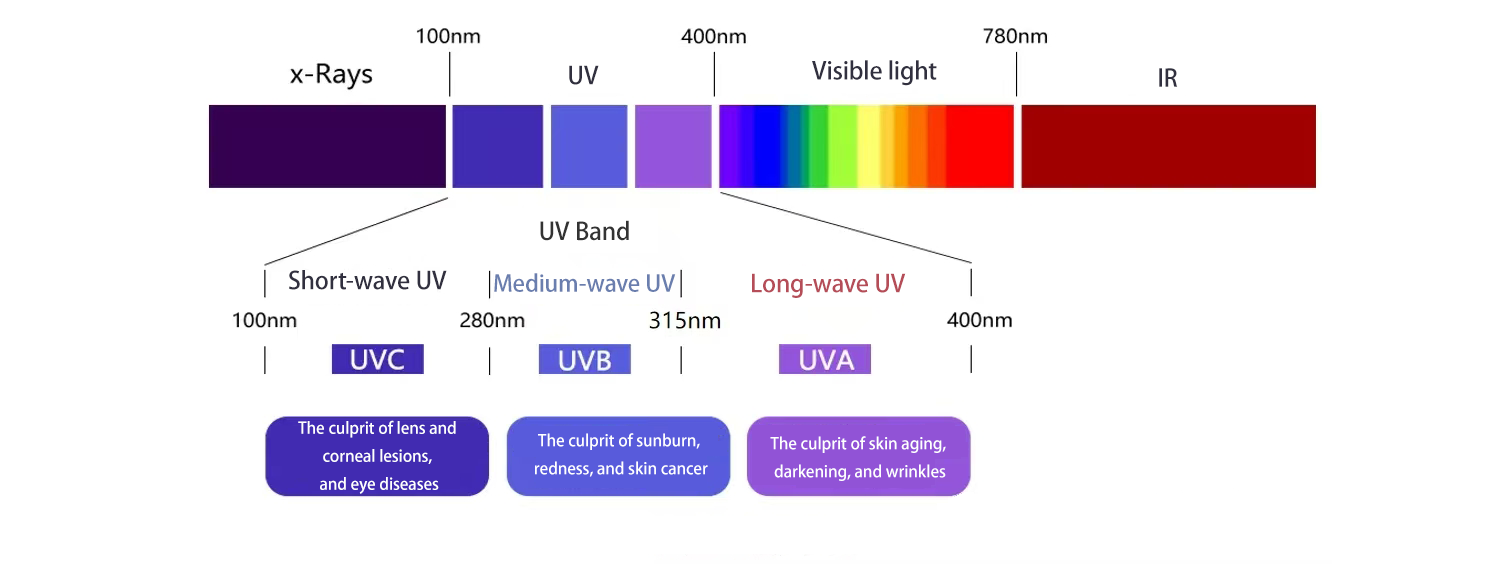
Light is categorized into different types based on its wavelength range. For example: visible light ranges from 370 to 380 nm; ultraviolet (UV) light ranges from 100 to 400 nm; light with wavelengths below 100 nm is known as X-rays; and light above 780 nm is referred to as infrared radiation.
Within the UV spectrum, UV light is further divided into three categories based on wavelength:
● Long-wave ultraviolet (UV-A): 315–400 nm
● Medium-wave ultraviolet (UV-B): 280–315 nm
● Short-wave ultraviolet (UV-C): 100–280 nm
Among these three types of UV radiation, the energy level increases in the following order: UV-C < UV-B < UV-A. However, in terms of their relative abundance in natural sunlight, the ranking is: UV-A (accounting for over 95%) > UV-B (less than 5%) > UV-C (almost nonexistent in the natural environment as it is absorbed by the ozone layer). Therefore, when referring to UV resistance in LCD display modules, it generally means protection against long-wave UV-A radiation.
1. UV-resistant OCA optical adhesive, also known as "UV-CUT OCA," is essentially a standard component in LCD display modules and is currently the most widely used solution for protecting against UV radiation. It should be specifically noted that UV-resistant OCA is typically non-UV-curing type OCA, also referred to as self-curing OCA. Besides its widespread use in outdoor LCD display modules, UV-resistant OCA is also commonly applied in EPD (electronic paper display) modules with front lighting, display modules requiring UV-blocking capabilities, and display modules with curved or irregular (non-standard) shapes.
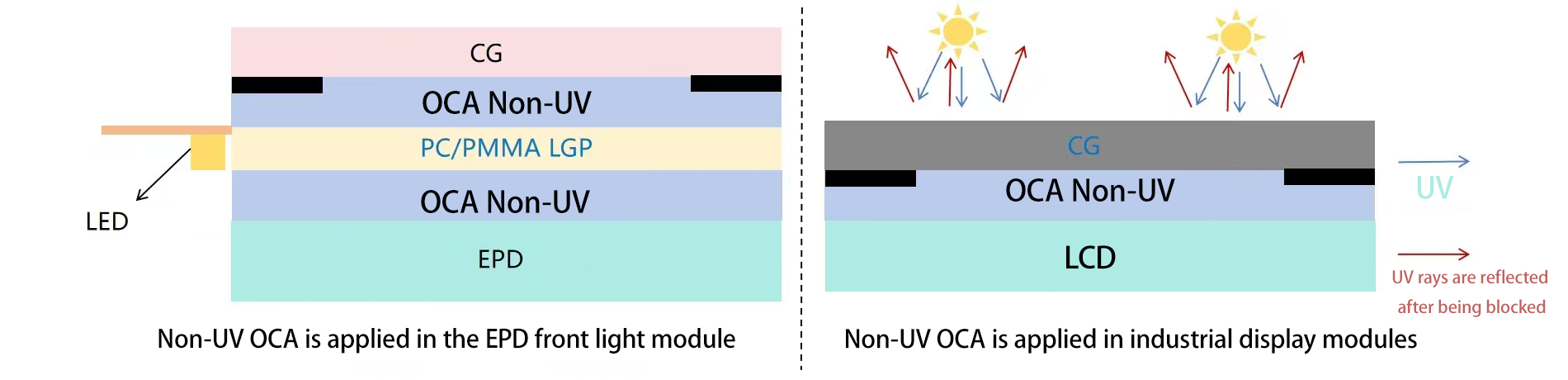
① Mechanism of UV-Resistant OCA:
Ordinary OCA optical adhesive (without UV-blocking capability) primarily consists of base resins, cross-linking agents, initiators, coupling agents, and functional additives. In contrast, UV-CUT OCA contains, in addition to these components, a special "UV-resistant additive." This additive is the key ingredient that enables the OCA to resist UV radiation. It works by **absorbing** high-energy ultraviolet light and converting it into harmless thermal energy, thereby preventing UV light from damaging the LCD display module.
② UV-Blocking Capability of UV-Resistant OCA:
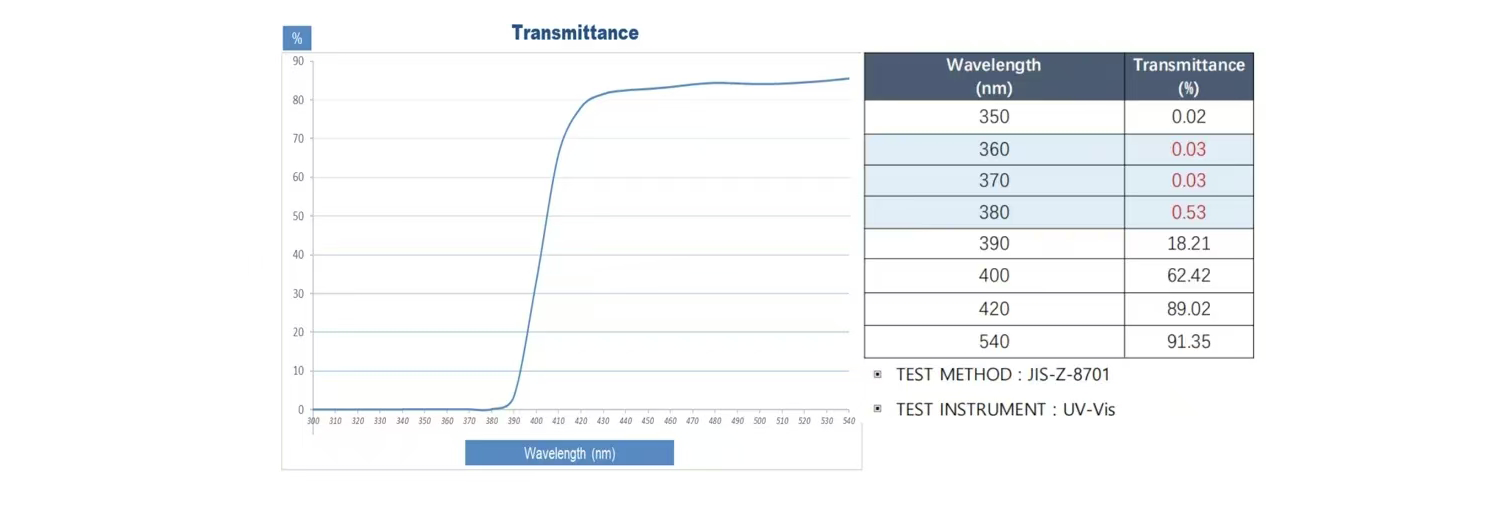
In product specifications for UV-resistant OCA, manufacturers typically provide data for the UV wavelength range of 340 nm to 380 nm, with transmittance of UV light below 340 nm being nearly 0%. Of course, if specific UV-blocking requirements exist for certain wavelength ranges, transmittance can be tested accordingly across different bands.
Generally, the UV-blocking performance of UV-resistant OCA is expressed in one of two ways:
●UV transmittance (340–380 nm) < 1%: The lower the transmittance, the smaller the proportion of UV light passing through the OCA + cover glass (CG) stack, indicating stronger UV-blocking performance.
●UV absorption/blocking rate (340–380 nm) > 97–99%: The higher the blocking rate, the more effective the OCA is at preventing UV light penetration.
2. UV-Resistant Ink:
The use of UV-resistant ink in outdoor LCD display modules is not mandatory. To avoid unnecessary cost overhead, the selection should be made flexibly based on specific product requirements. Outdoor products are typically exposed to harsher environments compared to consumer-grade products—such as prolonged exposure to sunlight and rain, or operation in mildly corrosive environments. Therefore, when selecting ink for the cover glass (CG), it must meet stringent reliability tests, including resistance to salt spray, artificial sweat, and chemical reagents.
① Conditions for Selecting UV-Resistant Ink:
● The customer has specific UV resistance testing requirements for the individual CG cover.
● The customer requires a uniform "full-black" appearance for the LCD display module.
● The ink on the cover glass shows yellowing or noticeable color variation and unevenness after UV exposure, particularly in cases like white cover plates.
② Mechanism of UV-Resistant Ink:
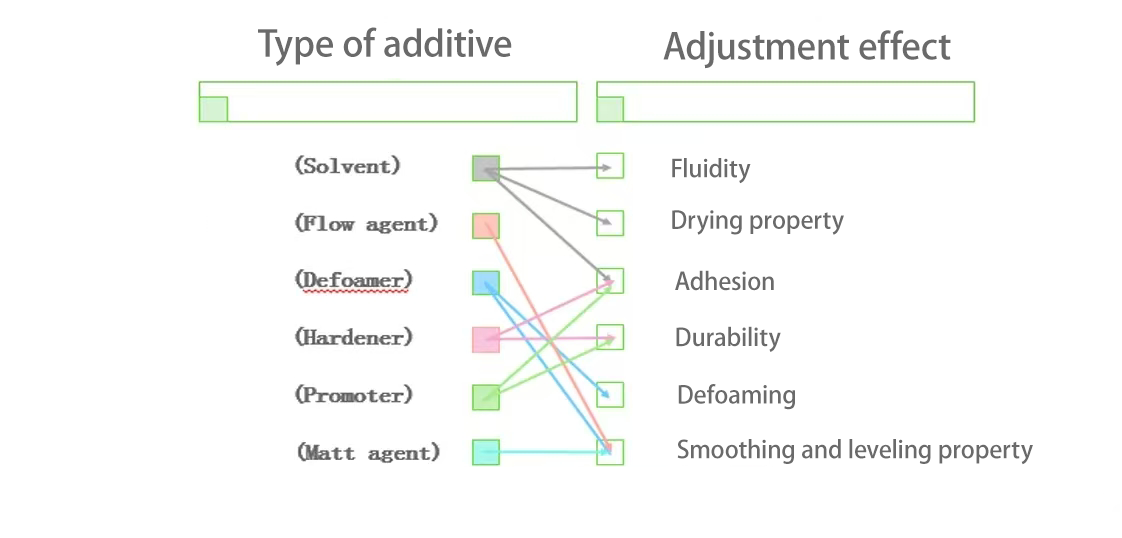
Conventional ink primarily consists of pigments, binders (resin systems), and functional additives (such as curing agents, diluents, defoamers, and leveling agents).
 ●Pigments: These provide the ink’s color and primarily determine the appearance of the cover plate—for example, carbon black for black covers and titanium dioxide (TiO₂) for white covers. Pigments have highly stable crystalline structures that effectively reflect or absorb UV light, making them resistant to degradation and thus highly lightfast.
●Binders: These form the "skeleton" of the ink and act as carriers for the pigments. After curing, the binder forms a protective film layer that encapsulates and shields the pigments. Commonly used binders include epoxy-based and polyester-based resins.
●Functional Additives: These are performance modifiers used in small quantities but play a critical role—such as curing agents (to promote cross-linking), diluents (to adjust viscosity), defoamers (to eliminate bubbles), and leveling agents (to ensure smooth surface finish).
In UV-resistant inks, in addition to the components mentioned above, a "light stabilizer" is added. This light stabilizer is the key functional ingredient in UV-resistant ink. It preferentially and strongly absorbs high-energy UV radiation and converts it into harmless thermal energy, which is then dissipated as heat. In this way, the binder and pigments are protected from direct UV degradation.
3. UV-Resistant Polarizer:
Polarizers can be designed with UV resistance, and are therefore categorized into UV-resistant type and non-UV-resistant type.
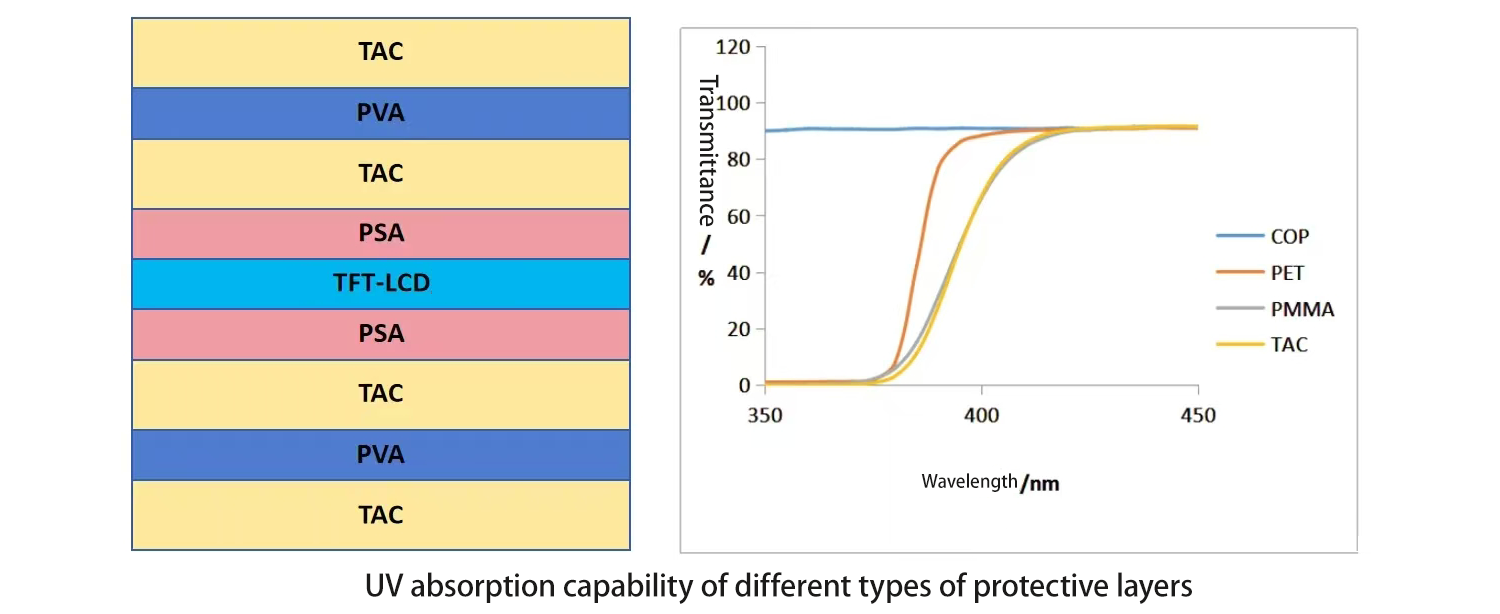
The UV-resistant polarizer incorporates a "UV absorber" into its TAC (triacetyl cellulose) layer, whereas the non-UV-resistant type does not contain such an additive. Therefore, during polarizer selection, it is essential to confirm with the polarizer manufacturer whether the product has UV-blocking capability.
Additionally, in the layered structure of a polarizer, four common materials are used to protect the core PVA (polyvinyl alcohol) layer: TAC, PMMA, COP, and PET. Among these materials, COP has the poorest UV absorption characteristics, followed by PET. PMMA and TAC offer relatively better UV protection. Currently, PMMA is lower in cost and has low moisture absorption, making it primarily suitable for large-size TV applications. However, for small-to-medium-sized display modules with higher reliability requirements, TAC remains the dominant choice.
4. UV-Resistant Glass Cover:
UV-resistant glass covers are widely used in applications such as automotive sunroofs, windshields, and side windows. However, their use in outdoor displays and consumer electronics displays remains relatively limited. Currently, some products are beginning to adopt technologies and materials from the automotive sector for use in outdoor and consumer display applications.
UV-resistant glass is typically manufactured by adding special additives—such as cerium oxide, titanium oxide, and iron oxide—into the base glass material. These metal oxides possess strong ultraviolet light absorption capabilities. However, they can affect the visible light transmittance and color tint of the glass.
In general, the visible light transmittance of UV-resistant glass is approximately half that of standard glass cover. The UV transmittance varies depending on the thickness of the glass: the thicker the glass, the lower the UV transmittance, resulting in better UV-blocking performance; conversely, thinner glass provides weaker UV protection.
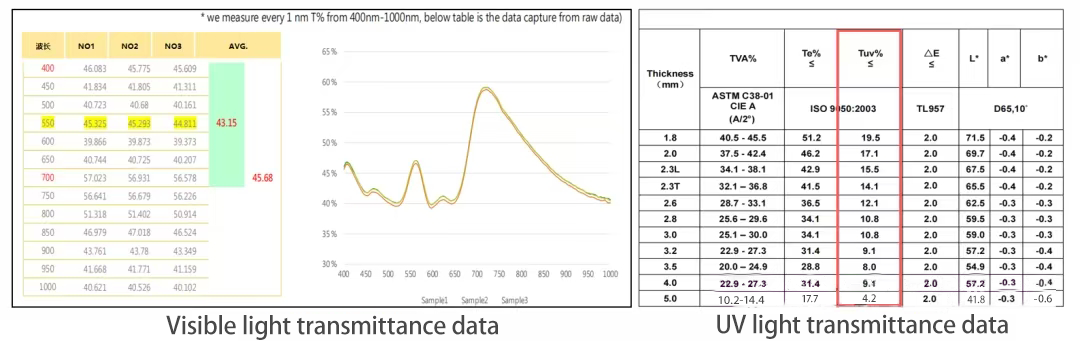
If you want the LCD full-lamination display module to achieve a uniform black ("one-piece black") appearance while also providing UV resistance, then a UV-resistant glass cover is a good choice. One additional note: UV-resistant glass covers usually require customization in consultation with the raw glass material supplier, which typically results in higher costs.