
Time:2026-01-29 Browse: 1
Mura is defined as the visual perception of color variation under identical lighting and background conditions. Simply put, it is a phenomenon of uneven display uniformity.
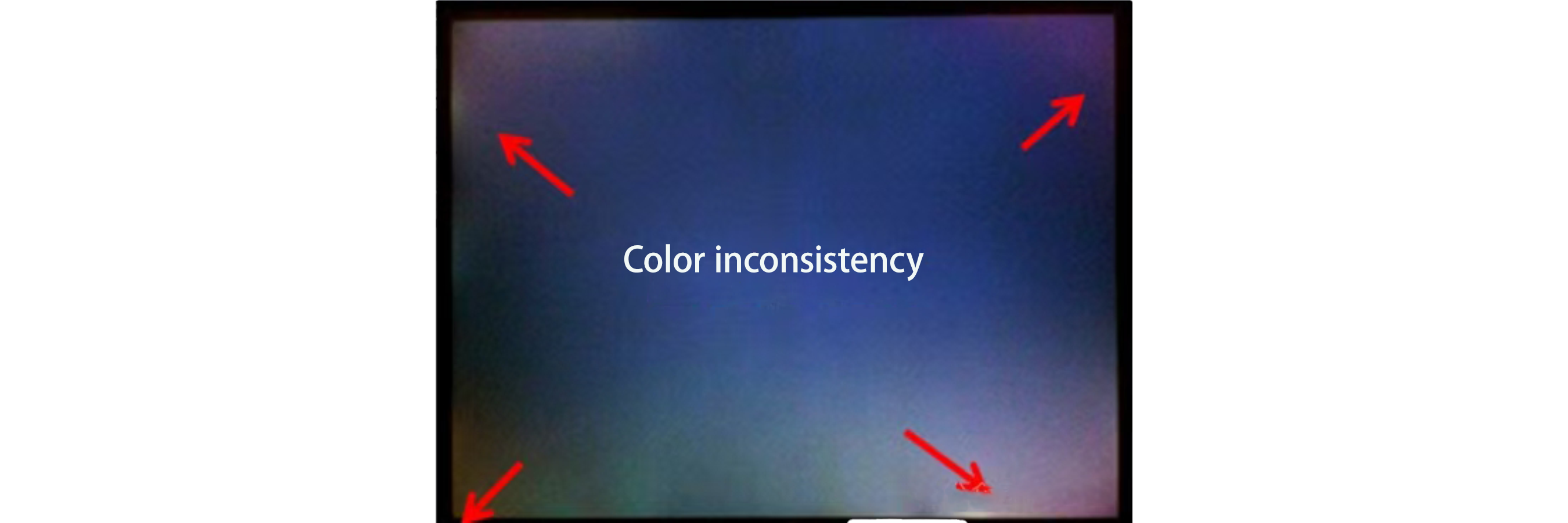 Mura within specification limits does not affect product functionality. Panel manufacturers categorize displays into different grades based on Mura severity, resulting in price variations.
To a certain extent, Mura reflects a manufacturer's display process capabilities. Less noticeable Mura indicates higher levels of design, manufacturing, and quality control expertise. The following are potential causes of Mura at various process stages.
5. Polarizer
●Incoming Quality: Defective incoming polarizer materials can cause Mura after the lamination process.
6.Human Factors: Improper handling of the panel, specifically applying excessive finger pressure, can easily result in spot Mura.
7.Assembly Factors: Localized stress caused by structural deformation, uneven force distribution, or interference during the assembly process can lead to spot Mura or edge Mura. This is typically verified by disassembling structural components.
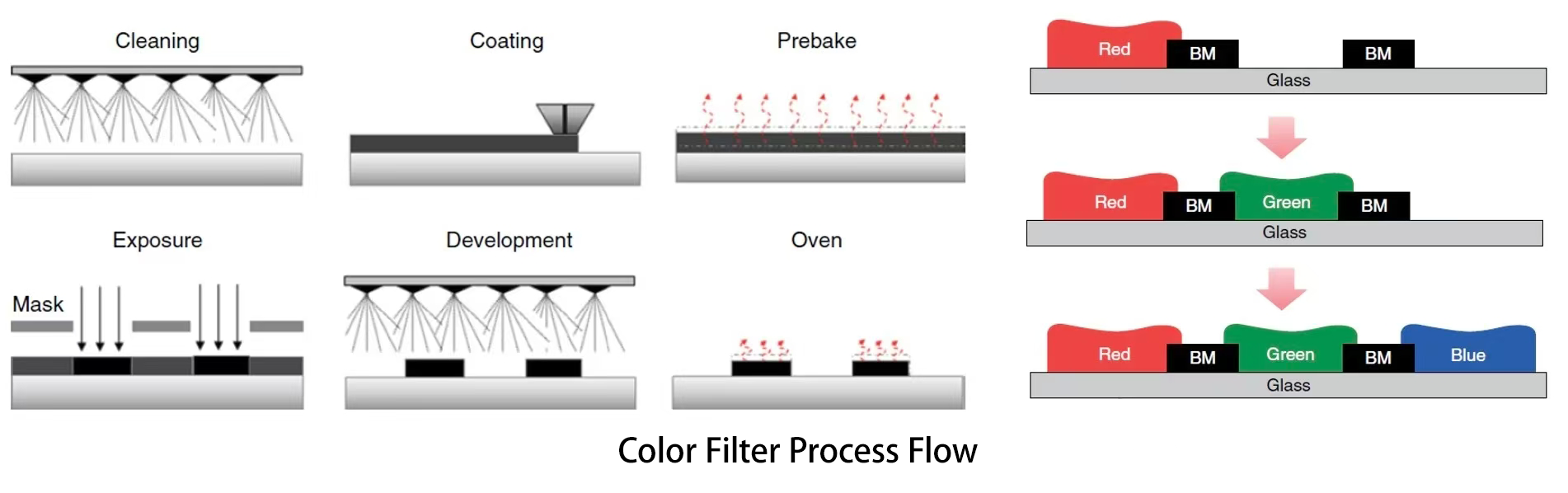
In the Color Filter (CF) process of the upper glass substrate, variations in coating control and cleaning process parameters may result in monochromatic Mura (display defects) on the RGB sub-pixels. This type of Mura is typically observed on single-color test patterns and is relatively rare.
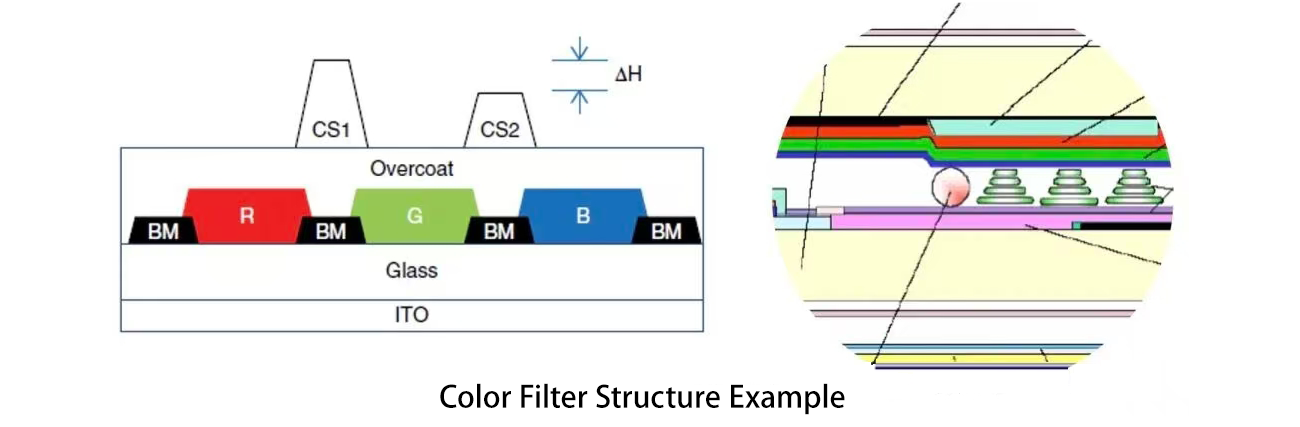
Variations in Cell gap thickness have a significant impact on Mura. This is generally influenced by the uniformity and size of the 4-5μm spacers; non-uniform gap thickness results in Mura defects.
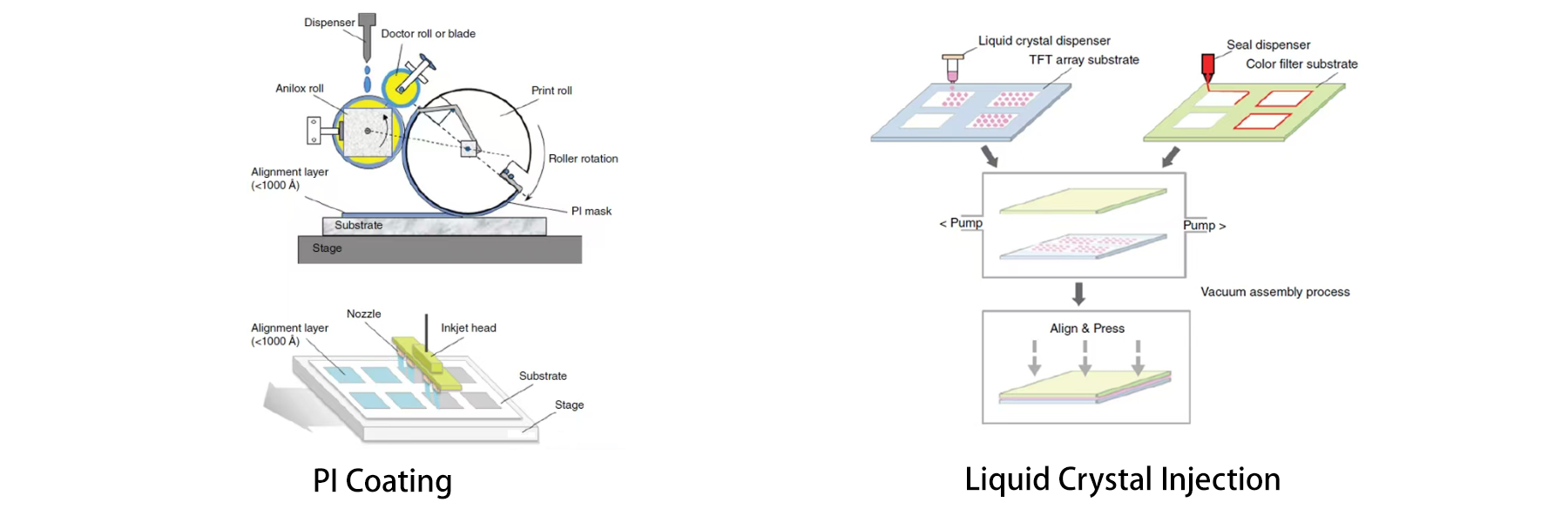
After PI coating, alignment treatment is required, which is typically achieved through either rubbing alignment or photo-alignment. Rubbing alignment is prone to causing Rubbing Mura, a relatively common defect that can be controlled by adjusting the frequency of roller replacement. In contrast, photo-alignment is a non-contact method and is considered more advanced.
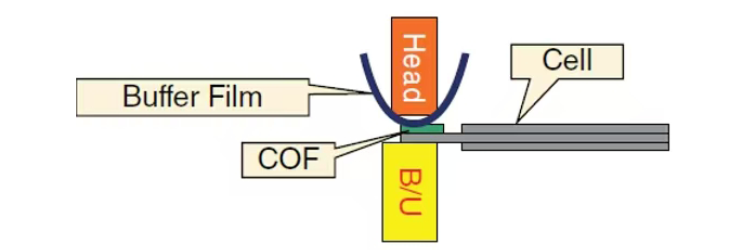 From the perspective of LCD operation principles, Mura is inevitable whenever stress is applied to the Cell; the only variable is the visibility of the Mura defect.Based on the principle of camera lens filters, Fuji (Fuji) Film developed the ND filter, which comes in eight grades: 1%, 2%, 3%, 4%, 5%, 6%, 8%, and 10%. The selection is determined based on industry requirements. Typically, product specifications designate a 5% or 6% filter.