
Time:2025-09-18 Browse: 1
1. Definition, Principle, and Characteristics of AF Coating
① AF coating, also known as anti-fingerprint coating, is short for Anti-Fingerprint Film.
The AF coating is a surface treatment designed to resist fingerprints. The full name is Anti-Fingerprint Film. Fingerprints are residues left on the surface of an object after being touched by fingers. These residues mainly consist of oils, sweat, dust, and other contaminants. When fingers separate from the object's surface, these fingerprint residues often remain behind.
The principle of the AF anti-fingerprint coating is similar to the "lotus leaf effect," where the surface of the object is treated to alter its wettability, making it difficult for contaminants to adhere. This helps prevent fingerprints and other pollutants from sticking to the surface. After AF treatment, the cover glass exhibits excellent hydrophobic properties. The water contact angle on the surface of the treated glass is typically required to be ≥110°, providing a smooth tactile feel and significantly reducing the accumulation of dirt and stains, thereby enhancing the user experience.
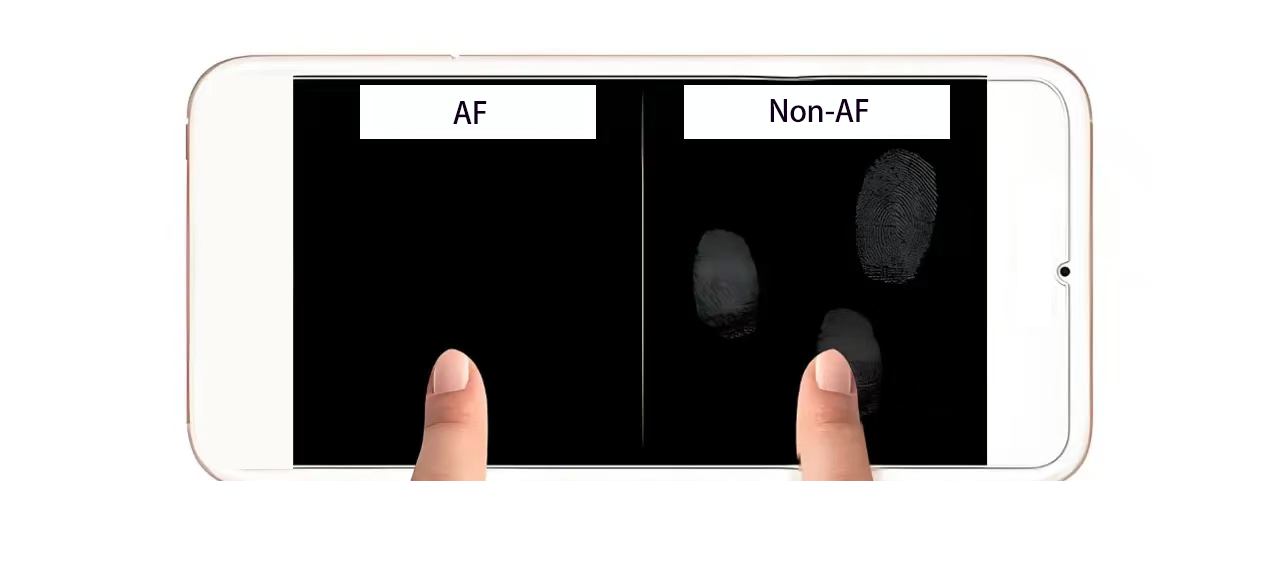
② Principle of AF Anti-Fingerprint Coating:
Through specific manufacturing processes, a nano-scale thin anti-fingerprint layer is formed on the surface of the glass cover panel. This layer reduces the surface tension of the glass to a minimum, endowing it with strong hydrophobic, oleophobic, and resistance to organic contaminants. As a result, the glass surface maintains a smooth and clean appearance over an extended period.
Currently, the primary core material used in AF anti-fingerprint coatings is fluorine-containing compounds. These molecules contain two key functional groups: reactive silane groups and organic fluorine groups.
● Reactive silane groups: These can chemically react with water (hydroxyl groups- OH) present on the glass (SiO₂) surface, forming strong covalent bonds (siloxane bonds), which firmly anchor the coating to the glass substrate.
● Organic fluorine groups: These are responsible for providing extremely low surface tension and are the key to achieving hydrophobicity, oil repellency, and anti-fingerprint performance.
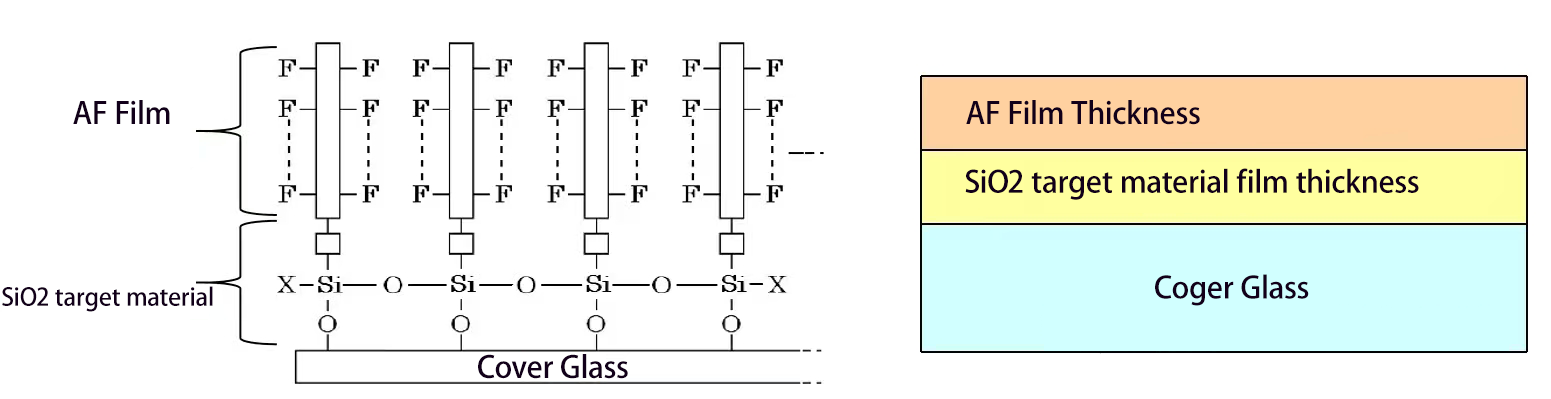
The specific reaction mechanism of the AF coating is as follows: siloxane undergoes a hydrolysis reaction with water in the atmosphere to form silanol groups; the fluorinated silanol groups then chemically react with the silanol groups on the glass surface, enabling the AF coating to adhere onto the glass surface.
③ AF Coating Characteristics:
There are various methods and techniques for surface anti-contamination treatment, such as applying anti-fouling coatings, performing micro-engraving processes on the surface, or using AG (Anti-Glare Glass). However, these processes tend to affect the glass cover's optical transmittance, surface roughness, and smoothness to some extent. Therefore, for full-lamination display modules, anti-fingerprint treatment on the surface of the glass cover is currently achieved by depositing (via vacuum evaporation) or spraying a transparent anti-fingerprint AF coating onto the surface.
Unique Features of AF Coating Process:
● Does not alter the original texture of the glass cover surface.
● Offers excellent optical performance with no adverse impact on the glass cover’s light transmittance.
● Extremely low surface tension, providing effective water-repellent, oil-resistant, and anti-fingerprint properties.
● Good weather resistance and chemical resistance, excellent abrasion resistance, low coefficient of dynamic friction, and a pleasant touch feel.
2. Mainstream AF Coating Processes
There are two common thin-film deposition techniques: PVD (Physical Vapor Deposition) and CVD (Chemical Vapor Deposition). PVD can be further categorized into vacuum evaporation coating, vacuum sputtering coating, and vacuum ion plating.
Currently, the two mainstream processes used in AF coating are vacuum evaporation coating (evaporation process) and spray coating (wet process).
① AF Vacuum Evaporation Process: Under vacuum conditions, a high-speed electron beam generated by an electron gun is used to bombard and heat the AF coating material, causing it to evaporate and deposit onto the surface of the glass cover, forming a dense AF coating layer.
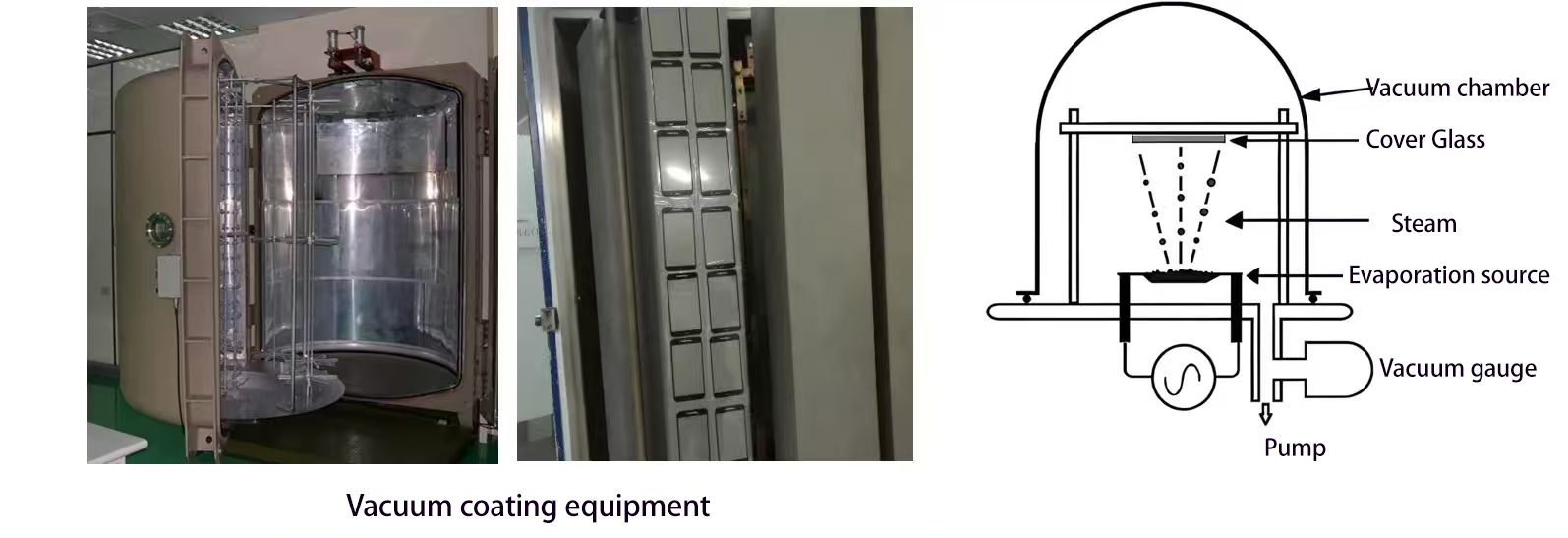
In the AF vacuum evaporation process, the glass cover must first be thoroughly cleaned. Then, the glass covers are properly arranged and suspended inside the coating chamber, completing the pre-coating preparation.
During the AF evaporation process, a layer of SiO₂ is first deposited onto the surface of the glass cover (SiO₂ serves as an intermediate adhesion layer), followed by the deposition of the AF coating layer. After coating, the glass covers are removed from the evaporator and placed in a cleanroom environment to stand undisturbed for at least 2 hours. Finally, visual inspection, application of protective film, packaging, and shipment are carried out.

After the AF coating has been completed via evaporation, although the AF film layer has formed, its state is not yet stable. Letting the glass covers stand undisturbed for a certain period before applying the protective film allows any remaining active functional groups to continue reacting fully, enabling the AF coating layer to achieve its intended performance properties, such as adhesion strength and abrasion resistance.
② AF Spray Coating Process:
The AF spray coating process is a low-cost, high-yield AF coating method developed based on vacuum deposition, designed to reduce equipment costs. In this process, AF solution is uniformly sprayed onto the surface of the glass cover using high pressure to form an AF coating layer. The glass cover is then baked under controlled temperature conditions (160–180 °C) for a specific duration (10–15 minutes) to enhance the adhesion of the AF coating layer to the glass surface.
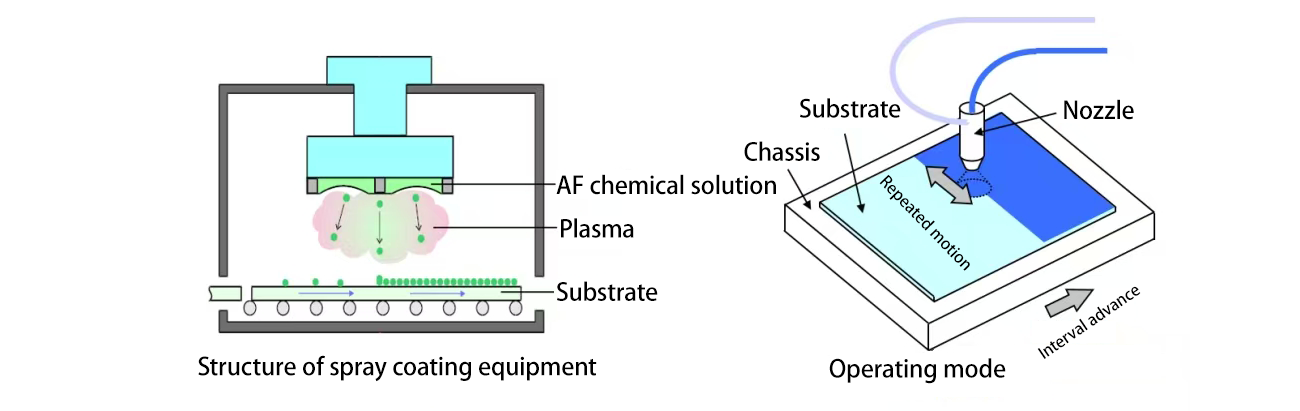
The process flow of the AF spray coating method is simpler compared to the AF vacuum evaporation process, mainly consisting of the following steps: plasma cleaning, AF spraying, baking, visual inspection, and film application & packaging.
Fundamental difference between AF spray coating and vacuum evaporation processes:
In the AF vacuum evaporation process, a transition layer of SiO₂ is deposited under vacuum conditions simultaneously with the AF coating in a single deposition step, whereas the spray coating process does not include such a transition layer. In the vacuum evaporation process, the SiO₂ transition layer forms strong bonding with both the glass substrate and the AF layer. As a result, the AF coating produced via vacuum evaporation outperforms the spray-coated AF layer across various performance limit tests. The most direct comparative tests include abrasion resistance and chemical resistance testing.
Final summary on product selection:
For mid-to-low-end products, the spray coating process can generally meet requirements in all aspects, while offering lower cost and higher production efficiency—making it the preferred choice. For high-end products—especially those requiring high reliability, durability, excellent abrasion resistance, or additional AR (anti-reflective) coatings—the vacuum evaporation process is the ideal solution.
3. There are three methods for testing the performance of AF coatings: abrasion resistance test, water contact angle test, and coefficient of dynamic friction test.
① Water Contact Angle Test:
The water contact angle, also known simply as contact angle, refers to the angle formed between a liquid droplet and the surface of a solid when the droplet lands on it. Due to the surface tension of the liquid, this angle is created at the interface between the liquid and the solid plane, and is known as the water contact angle.
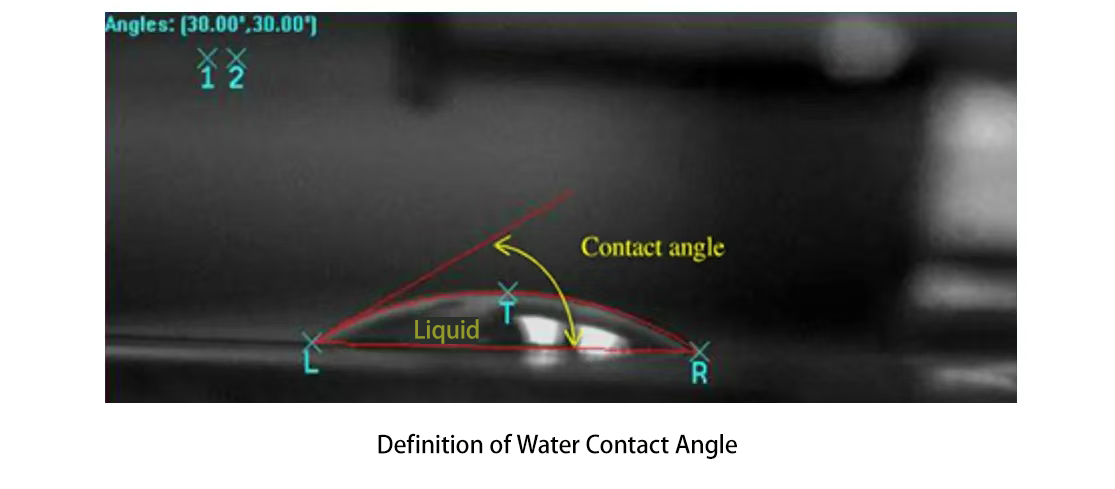
● Purpose of Water Contact Angle Test:
To primarily evaluate the anti-fingerprint performance of the AF coating layer on the surface of the glass cover.
● Water Contact Angle Test Conditions:
Place the glass cover on the testing platform with the ink-printed side facing down, and measure the water contact angle on the AF-coated surface. It is generally recommended to measure the contact angle at five different locations to assess the uniformity of the AF coating.
● Water Contact Angle Acceptance Criteria:
The water contact angle on the AF-coated surface of the glass cover should be ≥110°; for stricter requirements, it is recommended to achieve ≥115°.
② Abrasion Resistance Test:
There are typically different test materials used, primarily steel wool and eraser. Regardless of whether steel wool or an eraser is used, the testing procedure and evaluation criteria are generally similar.
● Purpose of Abrasion Resistance Test:
To primarily evaluate the performance and abrasion resistance of the AF coating layer on the surface of the glass cover.
● Abrasion Resistance Test Procedure:
--- Before testing, measure the water contact angle on the AF-coated surface of the glass cover at five evenly distributed locations. The initial water contact angle should generally be ≥110°; for stricter requirements, ≥115° is recommended.
--- Use a 20×20 mm abrading tip (10×10 mm for stricter requirements) with #0000 steel wool or an eraser, applying a 1000 g load. Perform 2000 reciprocating cycles (2500 for stricter requirements) over a 40 mm stroke at a speed of 40 cycles/min (60 cycles/min for stricter requirements). Each complete back-and-forth motion counts as one cycle.
--- After completing the steel wool or eraser abrasion test, select three points within the abraded area on the AF-coated surface of the glass cover and measure the water contact angle to determine its value after abrasion.
● Abrasion Resistance Test Acceptance Criteria:
After testing, there should be no peeling or delamination of the AF coating on the glass cover surface, and the water contact angle must remain >100°.
③ Coefficient of Dynamic Friction Test:
● Purpose of Dynamic Friction Coefficient Test:
The coefficient of dynamic friction directly affects the touch feel on the glass cover surface. If the glass cover surface is not treated with an AF coating, the dynamic friction coefficient is typically very high.
● Test Conditions for Dynamic Friction Coefficient:
Place Asahiwell precision weighing paper under a weighted block with a load of 200±20 g. Then place the combined weighing paper and weighted block onto the AF-coated surface of the glass cover. Pull the block across the surface at a speed of 100 mm/min over a testing distance of 50 mm.
● Dynamic Friction Coefficient Acceptance Criteria:
The standard requirement for the coefficient of dynamic friction is ≤0.05; for stricter requirements, it should be ≤0.03.