Time:2025-10-09 Browse: 1
During the ESD (electrostatic discharge) testing of LCD liquid crystal display modules, various functional failures frequently occur, and these defects are irreversible, constituting "hard damage."
To reduce the impact of ESD on LCDs, we provide a detailed discussion in three areas: the challenges ESD poses to the LCD display industry, the definition and generation principles of electrostatic electricity, and common ESD discharge models.
1. The Challenges of ESD in the LCD Display Industry
ESD (electrostatic discharge) is considered the "greatest potential threat" affecting product quality in the LCD optoelectronic display industry. ESD protection is therefore recognized as a critically important aspect of quality control in LCD display modules.

ESD damage to LCD display modules is typically classified into two types: catastrophic damage and latent damage.
① Catastrophic damage: This refers to severe damage to electronic components or materials within the LCD display module, resulting in complete functional failure. Such damage can usually be detected during the manufacturing process through routine inspection and testing. Therefore, the main impact on manufacturers is the cost of rework and repair, while customers experience immediate failure of the LCD module.
② Latent damage: This occurs when components or materials in the LCD module are partially damaged but still appear to function normally. This type of damage cannot be effectively identified during manufacturing verification processes. However, during later use, it may lead to product instability and shortened lifespan, posing a more serious threat to product quality. The resulting after-sales costs for manufacturers can be substantial and difficult to estimate.
Among these two types of ESD-related damages to LCD display modules, latent damage accounts for nearly 90%, while catastrophic damage makes up only about 10%. This means that 90% of ESD-induced damage to LCD modules cannot be effectively detected or intercepted at the factory—problems only become apparent to end users. It is precisely this phenomenon that poses the greatest challenge in the LCD display industry.
To mitigate the issues caused by ESD, the general principle followed is "prevention is better than cure" and "design first, fix later." Therefore, closely monitoring and controlling the ESD resistance of products throughout key stages—including design, component selection, manufacturing, and reliability testing—is currently the only effective approach adopted by the industry.
2. Definition and Generation Principles of ESD (Electrostatic Discharge)
① Definition of ESD (Electrostatic Discharge): ESD refers to the sudden discharge of static electricity. It occurs when two objects carrying different electrostatic charges either come into direct contact or influence each other through an electrostatic field, resulting in a rapid transfer of charge within an extremely short period of time, thereby generating a high-current pulse. Simply put, it is the process by which accumulated static electricity suddenly finds a "pathway" and rapidly transfers charge.
Common ways in which ESD is generated include:
- Contact, friction, or sliding between two objects;
- Separation of two objects;
- Close proximity of two charged objects.
ESD typically exhibits the following key characteristics:
- High voltage: Electrostatic voltage can reach several thousand volts, or even tens of thousands of volts. For example, in dry winter conditions, people often experience a "shock" when taking off clothing—this static voltage can approach several thousand volts. Although the voltage is high, the total amount of charge is relatively small.
- Short duration: The entire ESD discharge process usually completes within nanoseconds to microseconds.
- High instantaneous current: During ESD, the rapid transfer of charge over an extremely short time results in a very high peak current.
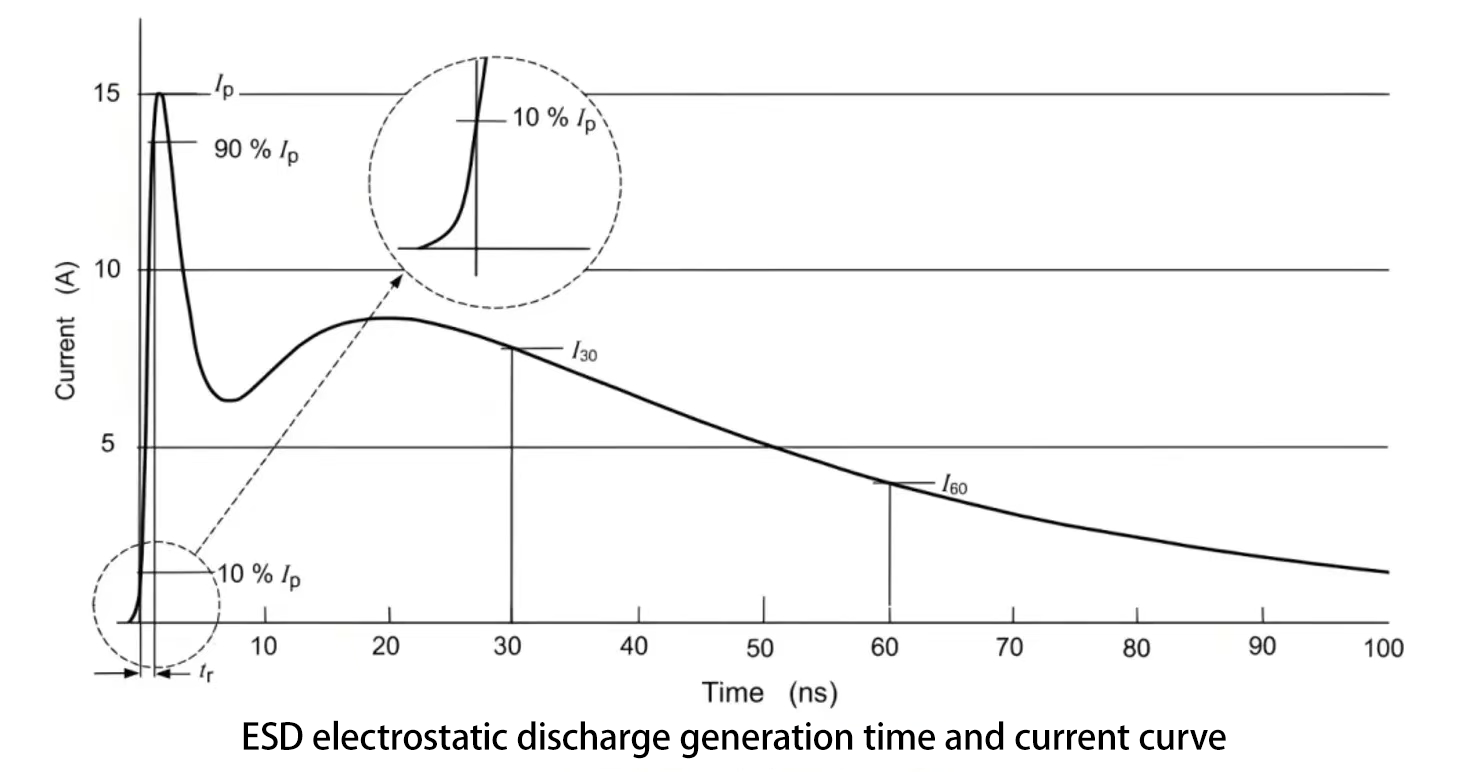
② Principles of ESD Generation: Electrostatic Generation (Charge Separation) and Electrostatic Discharge (Charge Transfer)
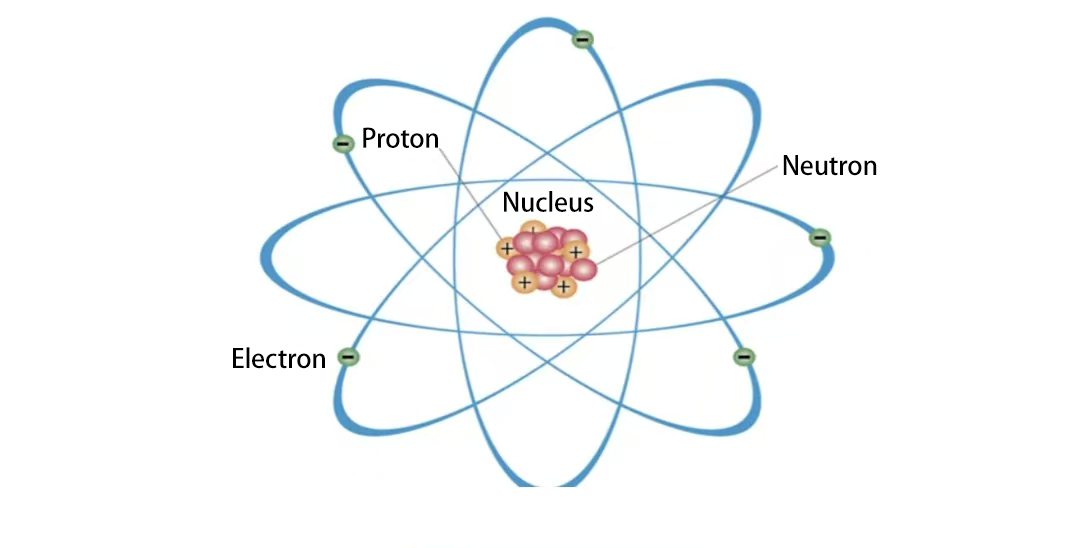
● Electrostatic Generation (Charge Separation): The generation of static electricity is essentially a process of "gain and loss of electrons," involving the atoms that make up all matter. At the center of each atom is a positively charged nucleus, surrounded by negatively charged electrons. Under normal conditions, the number of positive and negative charges in an atom is equal, so the object remains electrically neutral.
However, when two materials come into contact and then separate—especially through friction or rubbing—electrons can be transferred from one material to the other. This disrupts the balance of charges: the material that gains electrons becomes negatively charged, while the one that loses electrons becomes positively charged. This imbalance of charges is known as "charge separation," and it is the fundamental mechanism behind the generation of static electricity.
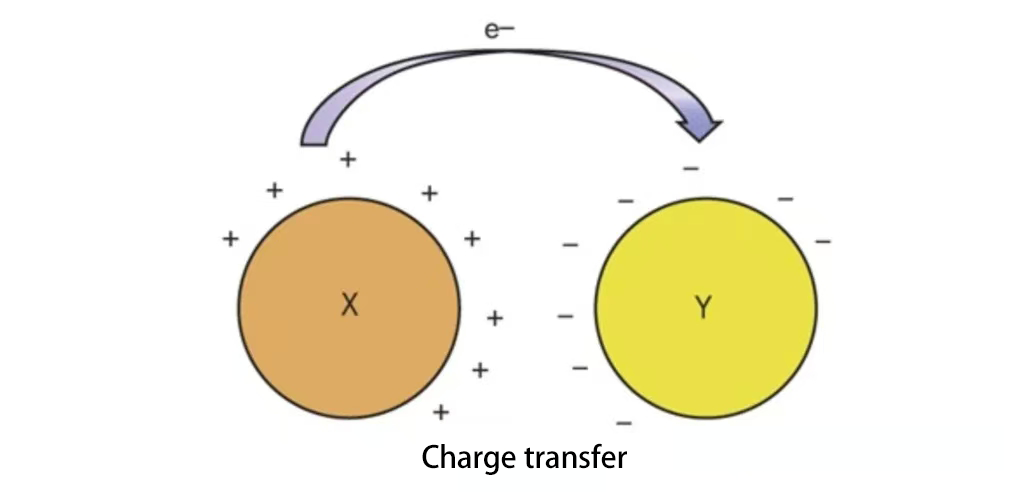
 When two different materials come into contact and then separate rapidly, the atoms of one material have a stronger hold on electrons than those of the other. At the moment of contact, electrons transfer from the material with weaker electron binding force to the material with stronger binding force. The material that loses electrons has fewer electrons while its atomic nucleus retains the same positive charge, resulting in an overall positive charge. Conversely, the material that gains electrons has more electrons while its atomic nucleus remains unchanged, leading to an overall negative charge. This process of contact and rapid separation between two different materials results in the generation of electrostatic charge, or ESD.
● Electrostatic Discharge (Charge Transfer): When a charged object approaches another object at a lower electric potential, the electric field strength between them increases rapidly. Once the electric field exceeds the dielectric breakdown threshold of the surrounding medium (such as air), the air is "ionized" and momentarily becomes conductive, creating a discharge path. This allows the accumulated charge to rapidly transfer between the objects—this process is known as electrostatic discharge.
The principle of ESD generation can be summarized as follows: during the contact and rapid separation of two different materials, charge is generated due to the gain or loss of electrons. These charges then accumulate on the surfaces of the materials. When a charged object comes near an object with a lower potential, the air between them breaks down, forming a conductive discharge path that enables the stored charge to transfer suddenly.
3. Common ESD Discharge Models
Currently, there are four main models for ESD (electrostatic discharge): the Human-Body Model (HBM), the Machine Model (MM), the Charged-Device Model (CDM), and the Field-Induced Model (FIM). Since the Field-Induced Model (FIM) is less commonly encountered, it will not be discussed in detail here.
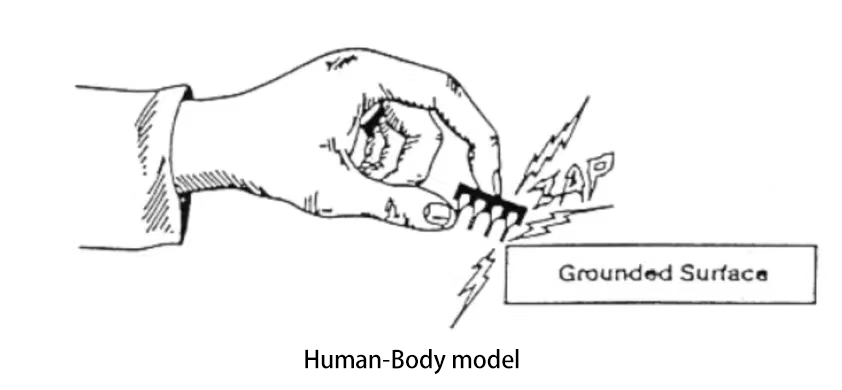
① Human-Body Model (HBM): The Human-Body Model simulates the scenario in a factory environment where a person carrying static electricity touches a grounded product. Its purpose is to evaluate a product's ability to withstand ESD damage during manufacturing, assembly, and transportation processes. It is not intended to represent everyday usage conditions.
In the LCD display industry, since human contact with LCD display modules is the most frequent, ESD testing is predominantly conducted using the HBM to specify the electrostatic discharge rating of products (contact discharge).
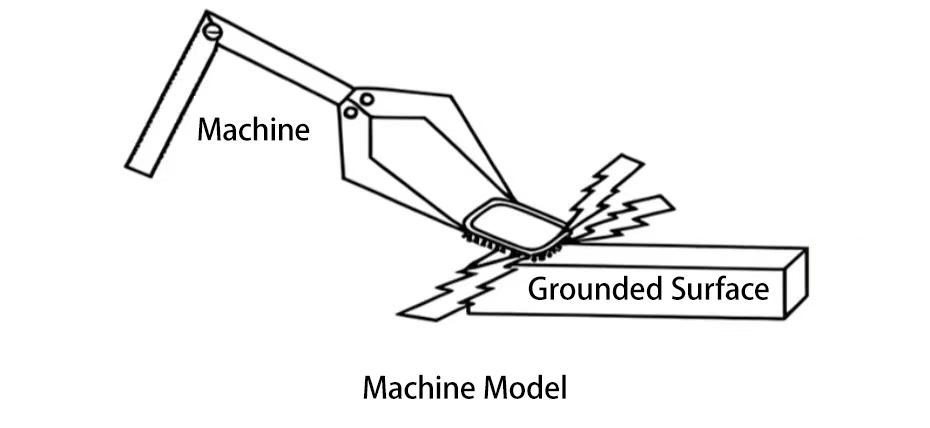
② Machine Model (MM): The Machine Model (MM) refers to a situation where machinery (such as robotic arms) accumulates static charge, and when the machine handles a product—such as picking it up—the discharge occurs through the product's connection pins. The MM is primarily used to simulate electrostatic discharge events caused by automated equipment during production or handling processes.
It should be noted that for machinery allowed on production lines, static charge can generally be eliminated using ionizers. The static electricity is neutralized by absorbing ions of the opposite polarity.
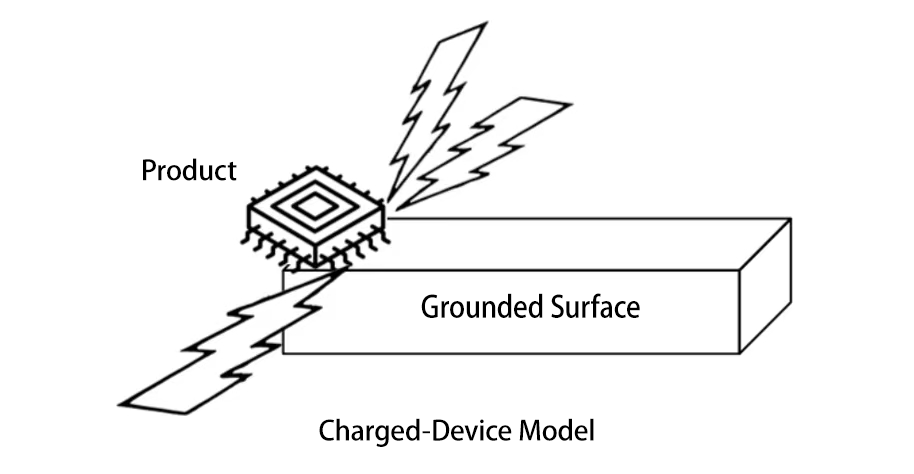
③ Charged-Device Model (CDM): The Charged-Device Model refers to a scenario where a product accumulates static charge internally due to friction or other factors, without being damaged during the charging process. When the product's connection pin comes into contact with a grounded object, the accumulated static charge inside the product is rapidly discharged through the pin, resulting in an electrostatic discharge event.
The discharge duration in CDM mode is even shorter—typically within a few nanoseconds—and the discharge phenomenon is more difficult to accurately simulate in real-world testing environments.