
Time:2025-12-18 Browse: 1
AG glass has been used in most display products. It was initially applied in the industrial control field and then gradually expanded to civil fields, including medical equipment, aerospace, outdoor monitoring equipment, etc. I will elaborate mainly on aspects such as the advantages of AG glass, the classification of AG glass processing technologies, and the surface treatment technologies of AG glass.
1. Advantages of AG glass: Anti Glare Glass is called "anti-glare glass" or "anti-reflective glass"; in layman's terms, AG glass is a type of glass that undergoes special processing on its surface; after processing, the glass surface changes from the original smooth and reflective surface to a rough matte non-reflective surface, that is, the glass surface has an uneven microstructure.
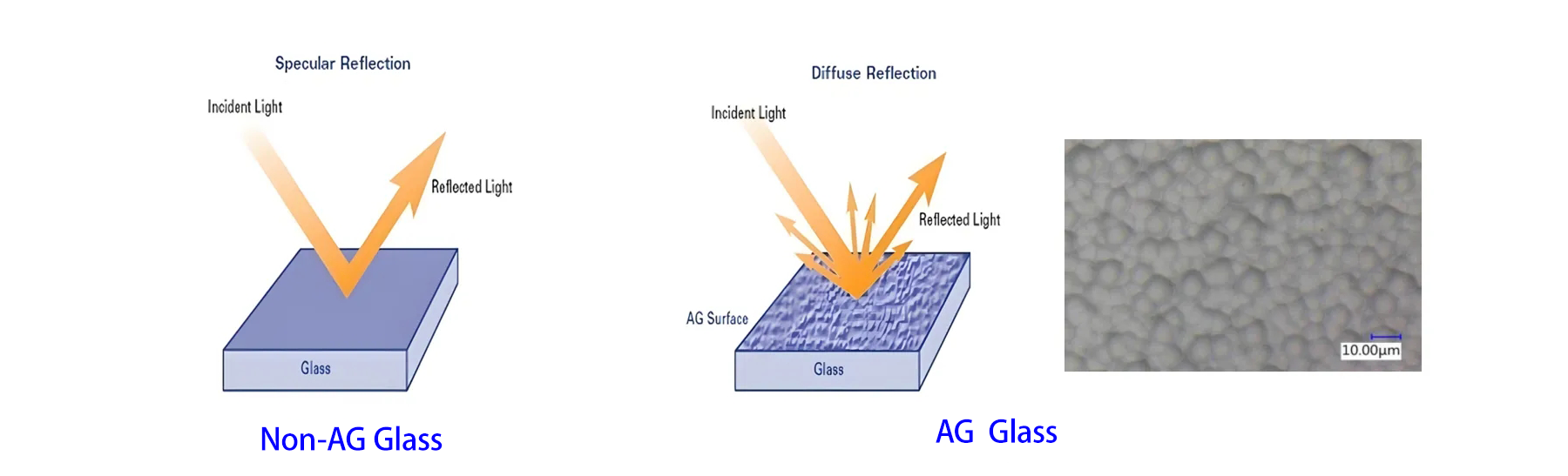
① Anti-glare, reducing the interference of ambient light
Due to the uneven and rough surface structure of AG glass, compared with ordinary smooth surface structures, light changes from specular reflection to diffuse reflection (also called diffused reflection). On rough surface structures, light can be reflected in various directions (an irregular reflection phenomenon). Compared with ordinary glass, AG glass has a lower reflectivity. The light reflectivity is reduced from 8% to below 1%, which can reduce the interference of ambient light reflection, improve the viewing angle of the displayed image, reduce screen reflection, and enhance people's visual effect when viewing the image.
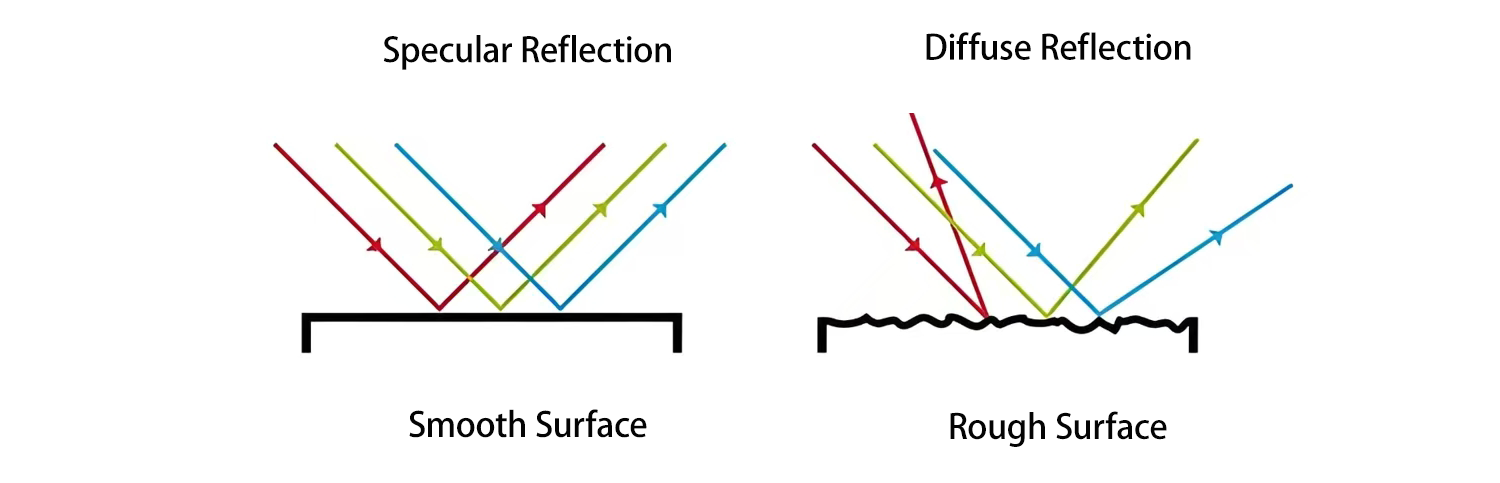
② Scratch resistance
AG glass forms a special structure on the glass surface through special processing techniques such as chemical etching and spraying. This structure not only changes the roughness of the glass surface but also makes the surface of AG glass have higher hardness and wear resistance, improving the scratch resistance of the glass surface. From another perspective, due to the anti-glare function of AG glass, which reduces the reflectivity of the glass surface, even if there are slight scratches on the surface of AG glass, these slight surface scratches are actually not easy to be detected because of the reduced surface reflectivity.
③ Skin-friendly texture and anti-fingerprint residue
The tiny particles and unevenness on the surface of AG glass make the fingers feel a very fine (matte texture) when touching it, giving people a comfortable, delicate and skin-friendly texture. In addition, the surface of AG glass has a layer of uneven microstructures. These microstructures make it difficult for oils and fingerprints to form continuous marks on the glass surface when fingers touch AG glass; instead, they are dispersed into tiny particles, thereby reducing the residue and visibility of fingerprints.
Currently, most glasses with AG will have an anti-fingerprint AF film (Anti-Fingerprint Coating) plated on the surface of the AG film layer to further reduce fingerprint residue.
2. Classification of AG glass processing technologies
The processing procedures and sequence of AG glass will vary according to the size of the processed products. There are generally two processing technologies in the industry: small piece technology and medium piece technology.
① Small piece technology: First, cut large pieces of glass, process them into small pieces of glass through CNC, then screen-print acid-resistant glue (for projects where the camera hole needs to avoid AG etching), then perform chemical etching AG treatment on the small pieces of glass, and finally carry out conventional post-processing procedures.
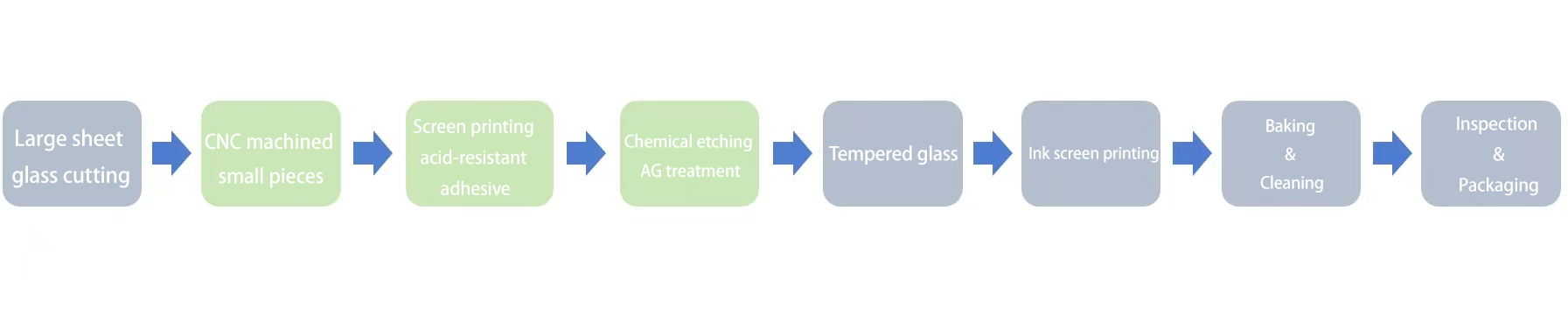
●Advantages: Silk-screen printing is performed after the glass is CNC-processed into small pieces, resulting in high concentricity of the camera hole, with the concentricity tolerance of the camera hole reaching ±0.1mm; there is no need for special control over the positioning dimensions of the camera hole, and the efficiency of CNC processing is high; the area of the glass after CNC processing is small, which reduces the consumption of etching solution and prolongs the service life of the etching solution.
●Disadvantages: Since the surface AG treatment is completed when the glass is in the small piece state, the proportion of defects such as AG scratches and chipping will increase during the subsequent manufacturing process, leading to higher costs; at the same time, after the cover plate manufacturer completes the CNC processing, they outsource the etching and AG processing, which increases logistics costs and lengthens the product delivery time.
②Medium-piece process: First, cut the large glass sheet, apply acid-resistant glue by silk-screen printing (for projects where the camera hole needs to avoid AG etching), perform chemical etching for AG treatment, then CNC-process the etched medium AG glass sheet into small pieces, and finally carry out the conventional subsequent processing procedures.
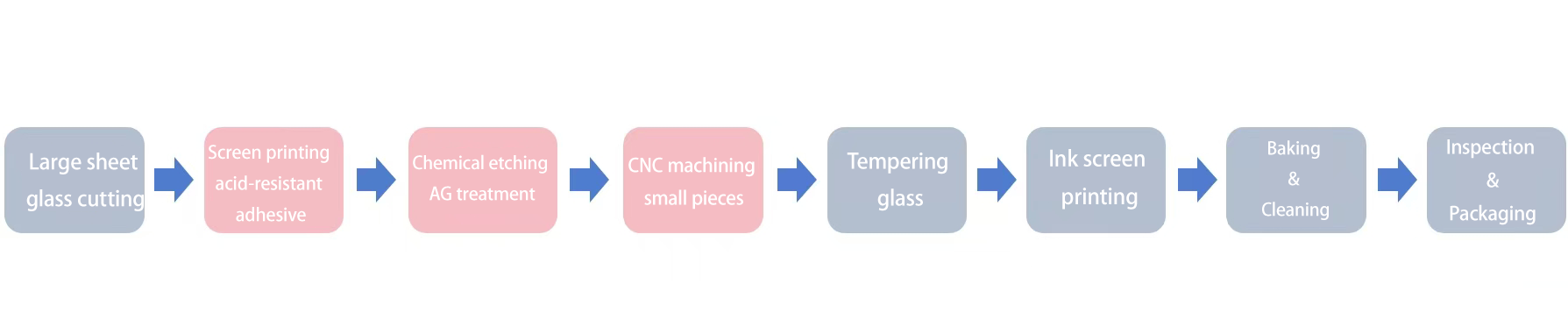
● Advantages: The proportion of defects such as AG scratches and chipping will be reduced, resulting in high product yield, high production efficiency, and low cost.
● Disadvantages: Since the glass avoids AG treatment at the camera hole when it is in the middle sheet state, and then the CNC processes the middle sheet glass into small pieces, the concentricity of the camera hole will be low during the screen printing of the camera hole, with the tolerance of the camera concentricity only reaching ±0.15mm; in addition, the middle sheet glass has a large area, leading to large consumption of etching solution and short service life of the etching solution.
Overall, for projects involving AG treatment on glass surfaces, both the small sheet process and the middle sheet process have their own advantages and disadvantages. The appropriate process should be flexibly selected according to the project requirements and the focus of attention.
3. AG glass surface treatment processes: such as spray AG, chemical etching AG, sandblasting AG, coating AG, and film AG; according to market usage, the three common ones are chemical etching AG, spray AG, and film AG.
① Chemical etching AG: In products such as mobile phones, tablets, vehicle-mounted devices, and laptops, chemical etching AG is mainly used, which is the most mainstream process. It uses hydrofluoric acid (HF) solution to perform chemical etching on the glass surface, transforming the smooth glass surface into a rough surface with micron-level uneven particles.
Basic principle: A chemical reaction occurs between the silicon-oxygen layer on the glass surface and hydrofluoric acid (HF) or its salts. By etching the glass surface, the crystal structure of the glass surface becomes uneven, causing light refraction and scattering. Depending on the solubility of the residual salts after HF etching, the glass becomes an opaque and matte frosted surface.
In the chemical etching process, the following key points need attention:
● Etching off the silicon-oxygen on the glass surface with hydrofluoric acid will result in different surface effects, namely: glossy surface or matte surface, depending on the solubility of the residual salts.
● Glass with different chemical compositions will affect the surface morphology after etching. Therefore, for glass of different brands and materials (Corning, Panda, Rainbow, Asahi Glass, etc.), different chemical etching conditions and process parameters need to be developed.
● The composition of the chemical etching solution will affect the surface morphology of the glass after etching.
② Spray AG: Due to its convenience, speed, and high production efficiency, it can quickly process AG glass of different specifications. The spray AG process is mainly applicable to mid-to-low-end products with large sizes.
Spray AG is a typical physical processing method. It uses spraying equipment to form a uniformly dispersed suspension of nano-sized silica particles on the glass surface through spraying, and then after high-temperature baking, the particles adhere to the glass surface and form an uneven film structure.
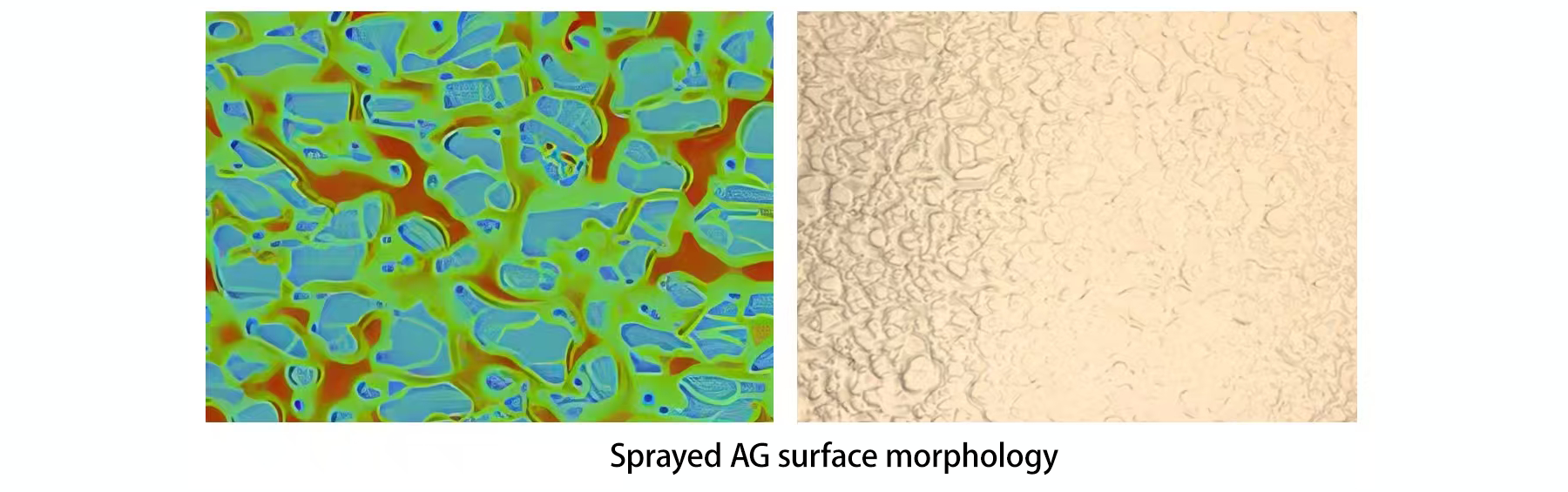
③ Film-attached AG: Initially used in car rearview mirrors to prevent high beams and glare from vehicles behind, it is rarely used in mainstream consumer electronic products.
EPD front light products come with a stylus. In order to make the writing effect of the stylus on EPD front light products as close as possible to that of a traditional signature pen on paper, a scheme of attaching an AG film to the surface of cover plates made of glass, composite materials, and PMMA is adopted.
Film-attached AG involves processing the surface structure of the film into an uneven structure, and then attaching the film to the surface of the object to be pasted, thereby reducing glare and lowering reflection.